

Teaching & Learning
Foreland Fields School - Curriculum Pathways
At Foreland Fields School we recognise that every child has a unique set of talents and abilities and our curriculum aims to nurture these, so that they can be the best that they can be.
To ensure that we are able to meet each child’s needs, or curriculum is arranged into 5 pathways – Foundation, Explorers, Adventurers, Discoverers and Pioneers.
Each curriculum pathway adopts a very distinct approach that begins to meet the collective needs of the students within that pathway in terms of the environment, curriculum areas taught and underlying pedagogy. Each pathway works towards specific but broad outcomes.
Within this context of an underlying approach, each child then follows their own highly personalised learning journey using Personal Learning Intention Maps – or PLIM.
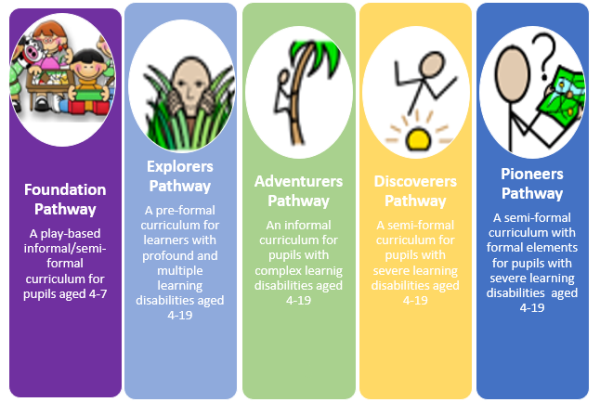
Foundation Pathway- Learning Through Play
This pathway is designed for students in Years R, 1 and 2 who are starting to develop very early skills and are beginning to explore the world around them.
Students follow a personalised learning journey using the Equals Informal Curriculum. Some students may follow elements of the Semi-formal curriculum.
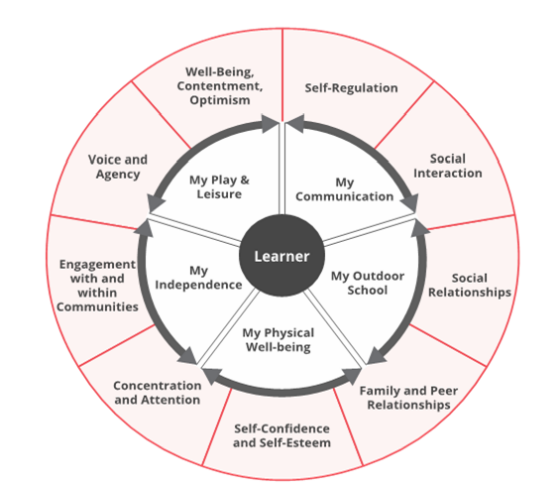
What Learning looks like:
- A child-led, play based curriculum
- Opportunities to access the community
- Opportunities to develop independence through daily routines
- Opportunities to develop physical, cognitive and social skills through play
- Opportunities to develop knowledge and understanding of the world
What adults focus on:
- Communication and interaction
- Curiosity and exploration
- Positive relationships and tolerating change
- Building attention and persistence
What progress looks like:
- Greater engagement
- Playing alongside others
- Communicating wants, needs and interests more clearly
- Developing independence and life-skills
- Tolerating change better
Explorers Pathway - Aiming for Greater Independence
This pathway is for students at the earliest stages of communication and development who have profound and multiple learning disabilities.
Students follow a personalised learning journey using the Equals Pre-formal Curriculum. Some students may follow elements of the Informal, or Semi-formal curricula.
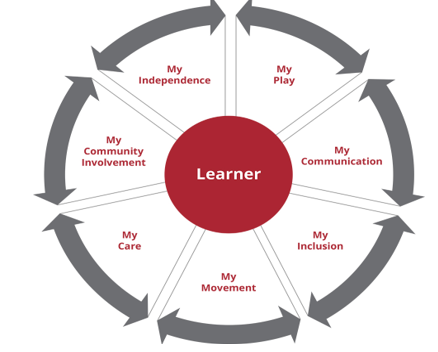
What Learning looks like:
- A sensory, therapeutic, curriculum
- Opportunities for connection through intensive interaction and early play
- Opportunities to move independently
- Opportunities to develop independence through daily routines
- Opportunities to explore the world beyond the classroom
What adults focus on:
- Developing the fundamentals of communication
- Developing a greater sense of agency and control
- Positive relationships
- Health, well-being and postural management
What progress looks like:
- Greater responses to adults, peers and activities
- Communicating choices
- Health and well-being
Adventurers Pathway - Learning to Be and Learning to Do
This pathway is designed for students with complex learning disabilities, who are starting to explore the world around them, but find change, uncertainty, demand and social interaction difficult.
Students follow a personalised learning journey using the Equals Informal Curriculum. Some students may follow elements of the Equals Semi-Formal curriculum. Some students may follow a bespoke individual curriculum that supports specific complex needs.
What Learning looks like:
- A low demand, opt-in, child-led approach
- Sensory, play-based learning invitations
- Opportunities to develop independence through daily routines
- Opportunities to access the community
What adults focus on:
- Promoting well-being and engagement
- Developing self-regulation strategies
- Communication and interaction
- Positive relationships and tolerating change
- Independence skills
What progress looks like:
- Greater engagement and well-being
- Playing alongside others
- Communicating wants, needs and interests more clearly
- Tolerating change and accessing a wider range of opportunities
- Developing life-skills and independence
Discoverers Pathway - Aiming for Independent Living
This pathway is designed for students with developing communication and early skills.
Students follow the Equals Semi-formal Curriculum. Some students may engage in some formal elements of learning – for example in maths and English. Some classes may adopt a more informal approach, if this suits their learners (see Adventurers Pathway).
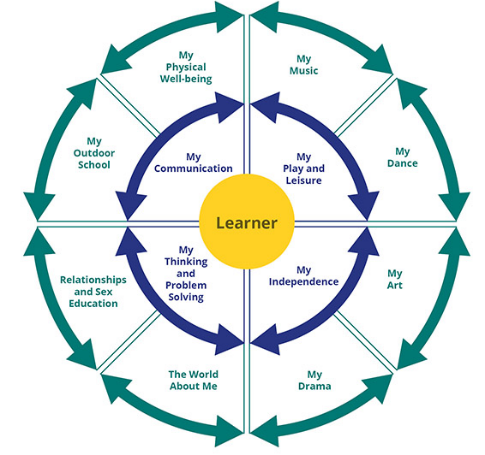
What Learning looks like:
- Context based opportunities to develop knowledge of the world, life-skills and early maths and English skills
- Play based opportunities to develop communication, social, cognitive and physical skills
- Daily routines to develop personal skills and independence
- Practising skills in the community
What adults focus on:
- Thinking and Problem Solving
- Communication and interaction
- Independence and life skills
- Knowledge and understanding of the world
What progress looks like:
- Growing independence and confidence
- Positive relationships at home, at school and in the community
- Developing functional skills including literacy, numeracy and knowledge of the world
- Accreditation in functional skills
- Tolerating change and accessing a wider range of opportunities
Pioneers Pathway - Aiming for the World of Work
This pathway is designed for students who have developing functional skills and who are able to access some subject specific learning.
Students follow a personalised learning journey, using a curriculum that blends the Equals Semi-Formal curriculum with some formal elements from the Year 1 & 2 National Curriculum. Some students may follow a purely formal curriculum.
What Learning looks like:
- Formal lessons in maths, English and other subject areas
- Opportunities to develop life-skills
- Opportunities to access the community
- Opportunities to develop hobbies and interests
What adults focus on:
- Developing literacy, numeracy and other formal curriculum areas
- Communication, interaction and social skills
- Independence and life skills
- Positive relationships and tolerating change
What progress looks like:
- Accreditation in maths, English and other areas of learning
- Positive relationships at home, at school and in the community
- Increasing independence at school, at home and in the community
- Tolerating change and accessing a wider range of opportunities